How to Stop Useeffect From Refetching Again

At that place are many ways to fetch data from an external API in React. Simply which one should you be using for your applications in 2021?
In this tutorial, nosotros will be reviewing five of the nearly normally used patterns to fetch data with React past making an HTTP request to a REST API.
We will not simply cover how to fetch data, merely how to all-time handle loading and fault state upon fetching our data.
Allow's get started!
For all of these examples, we will be using an endpoint from the popular JSON Placeholder API, but y'all can utilise your ain API that you take created (such every bit a Node API with Express) or any other public API.
Want Your Own Re-create?
Click here to download the cheatsheet in PDF format (it takes 5 seconds).
Information technology includes all of the essential information hither as a convenient PDF guide.
i. How to Fetch Data in React Using the Fetch API
The almost accessible manner to fetch data with React is using the Fetch API.
The Fetch API is a tool that's built into almost modernistic browsers on the window object (window.fetch) and enables u.s.a. to brand HTTP requests very easily using JavaScript promises.
To make a simple Get asking with fetch nosotros only demand to include the URL endpoint to which we want to make our asking. We want to make this request once our React component has mounted.
To do so, we brand our request inside the useEffect claw, and we make certain to provide an empty dependencies array as the second argument, so that our request is only fabricated once (bold it'southward not dependent on any other data in our component).
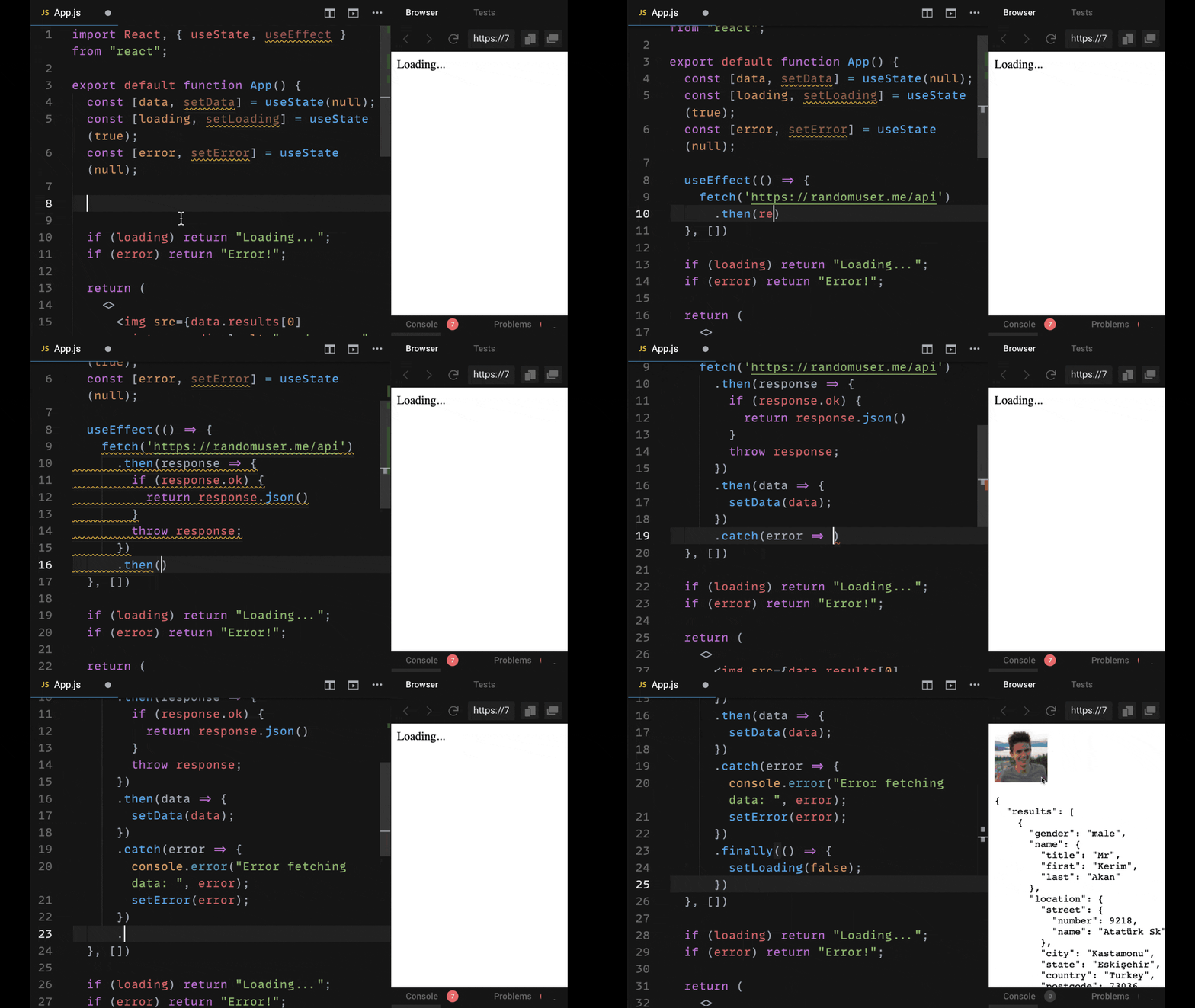
Inside the first .then() callback, we cheque to see if the response was okay (response.ok). If and then, we return our response to pass to the next, so call back as JSON data, since that's the information we'll go back from our random user API.
If information technology'southward non an okay response, we assume there was an error making the request. Using fetch, we demand to handle the errors ourselves, so we throw response as an error for it to handled past our catch callback.
Here in our example we are putting our error data in state with setError. If in that location'south an fault we return the text "Error!".
Notation that you tin can also display an error message from the fault object we put in country past using error.bulletin. We utilise the .finally() callback as function that is called when our hope has resolved successfully or not. In it, we set loading to faux, so that we no longer see our loading text.
Instead we see either our data on the page if the request was fabricated successfully, or that there was an mistake in making the request if not.
2. How to Fetch Data in React Using Axios
The second arroyo to making requests with React is to use the library axios.
In this example, nosotros will but revise our Fetch example past offset installing axios using npm:
npm install axios Then we will import it at the top of our component file.
What axios enables usa to exercise is to apply the verbal aforementioned promise syntax as fetch – only instead of using our outset and so callback to manually determine whether the response is okay and throw an error, axios takes care of that for us.
Additionally, information technology enables u.s. in that get-go callback to get the JSON data from response.data.
What's convenient about using axios is that information technology has a much shorter syntax that allows us to cutting downward on our code and it includes a lot of tools and features which Fetch does non take in its API.
All of these reasons are why it has become the go-to HTTP library for React developers.

three. How to Fetch Data in React Using async / look syntax
In ES7, information technology became possible to resolve promises using the async / await syntax.
The benefit of this is that it enables us to remove our .then(), .catch(), and .finally() callbacks and merely get back our asynchronously resolved data every bit if we were writing synchronous lawmaking without promises birthday.
In other words, nosotros do not have to rely on callbacks when we apply async / await with React.
We have to be aware of the fact that when we use useEffect, the issue function (the first argument) cannot be fabricated an async office.
If we have a look at the linting error that React gives u.s. if nosotros were using Create React App to build our projection, we will be told that this function cannot be asynchronous to foreclose race conditions.
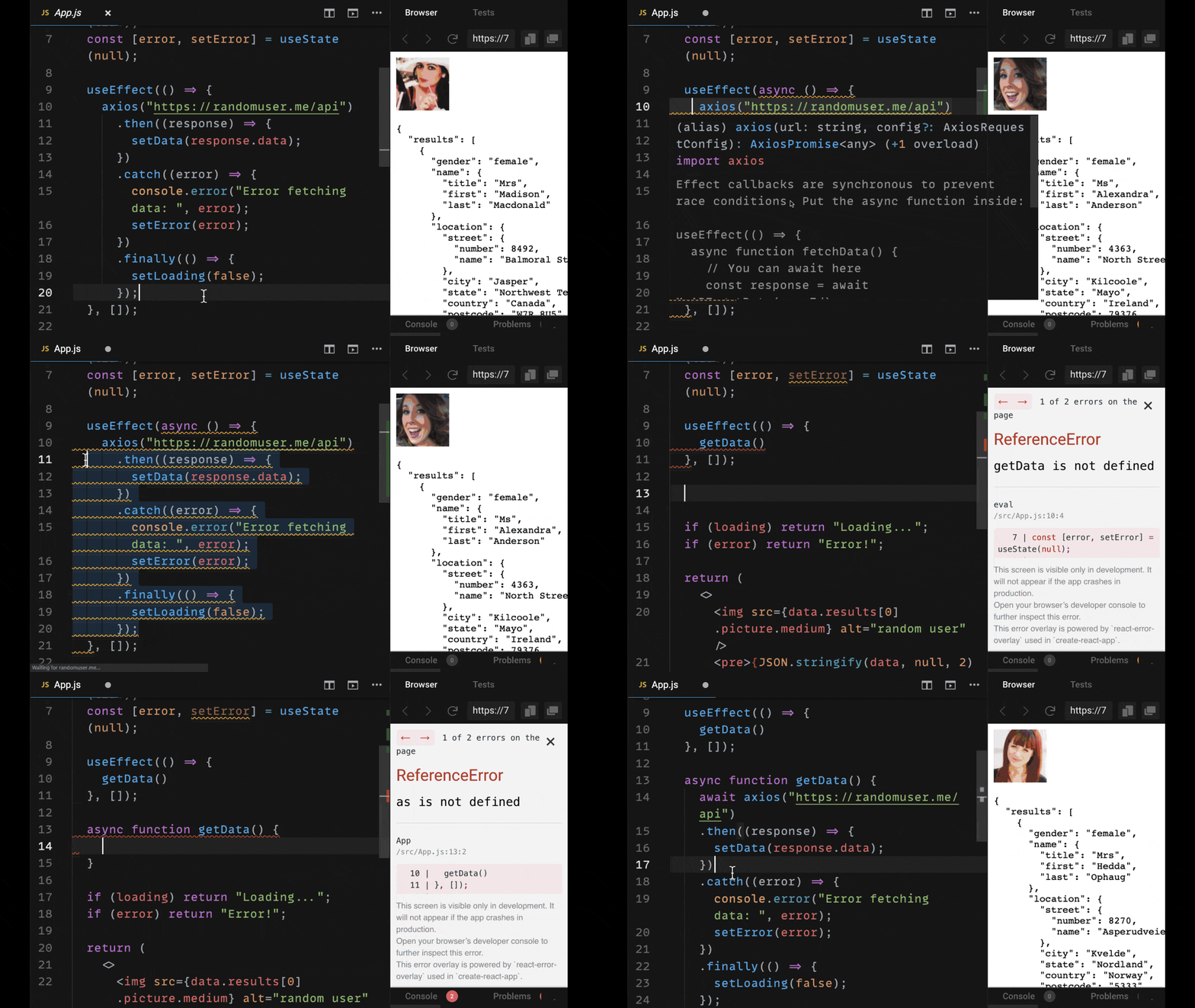
Every bit a result, instead of making that role async, we can merely create a separate async function in our component, which we tin call synchronously. That is, without the await keyword before it.
In this example, we create an async office called getData. By calling it synchronously within useEffect, we tin can fetch our data like we would wait.
four. How to Fetch Data in React Using a Custom React Hook (useFetch)
Over fourth dimension, you may realize that information technology gets a chip tedious and time-consuming to go on writing the useEffect hook with all of its boilerplate within every component in which you want to fetch data.
To cutting downward on our reused code, we tin use a custom hook equally a special abstraction, which we can write ourselves from a third political party library (like we are here, using the library react-fetch-hook).
A custom hook that makes our HTTP request allows united states of america to brand our components much more concise. All we have to do is call our hook at the tiptop of our component.
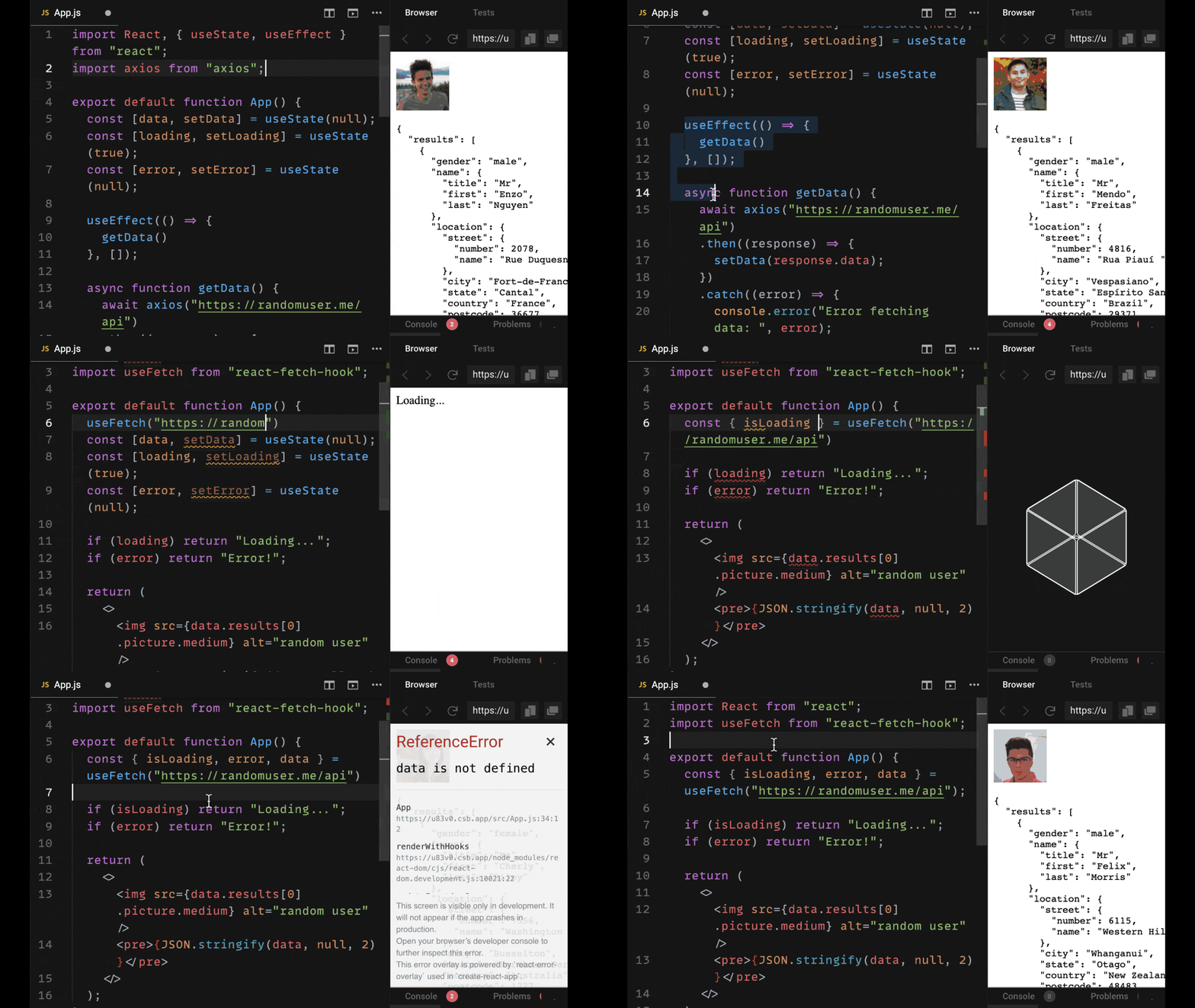
In this instance, we get back all the data, loading, and mistake state that we demand to exist able to use the same structure for our component as before, simply without having to useEffect. Plus, we no longer need to imperatively write how to resolve our promise from our GET request every time we want to make a request.
5. How to Fetch Information in React Using the React Query Library
Using custom hooks is a great approach to writing much more than concise HTTP requests to get our data and all of its related state. Just a library that really takes data fetching with hooks to the next level is React Query.
React Query not only allows u.s. to apply custom hooks that we can reuse across our components in a concise manner, but it also gives united states a great bargain of land direction tools to be able to control when, how, and how oftentimes our information is fetched.
In particular, React query gives the states a cache, which yous can see below through the React Query Devtools. This enables us to easily manage the requests that nosotros accept made co-ordinate to key value that nosotros specify for each asking.
For the requests beneath, our query for our random user information is identified by the string 'random-user' (provided as the beginning argument to useQuery).
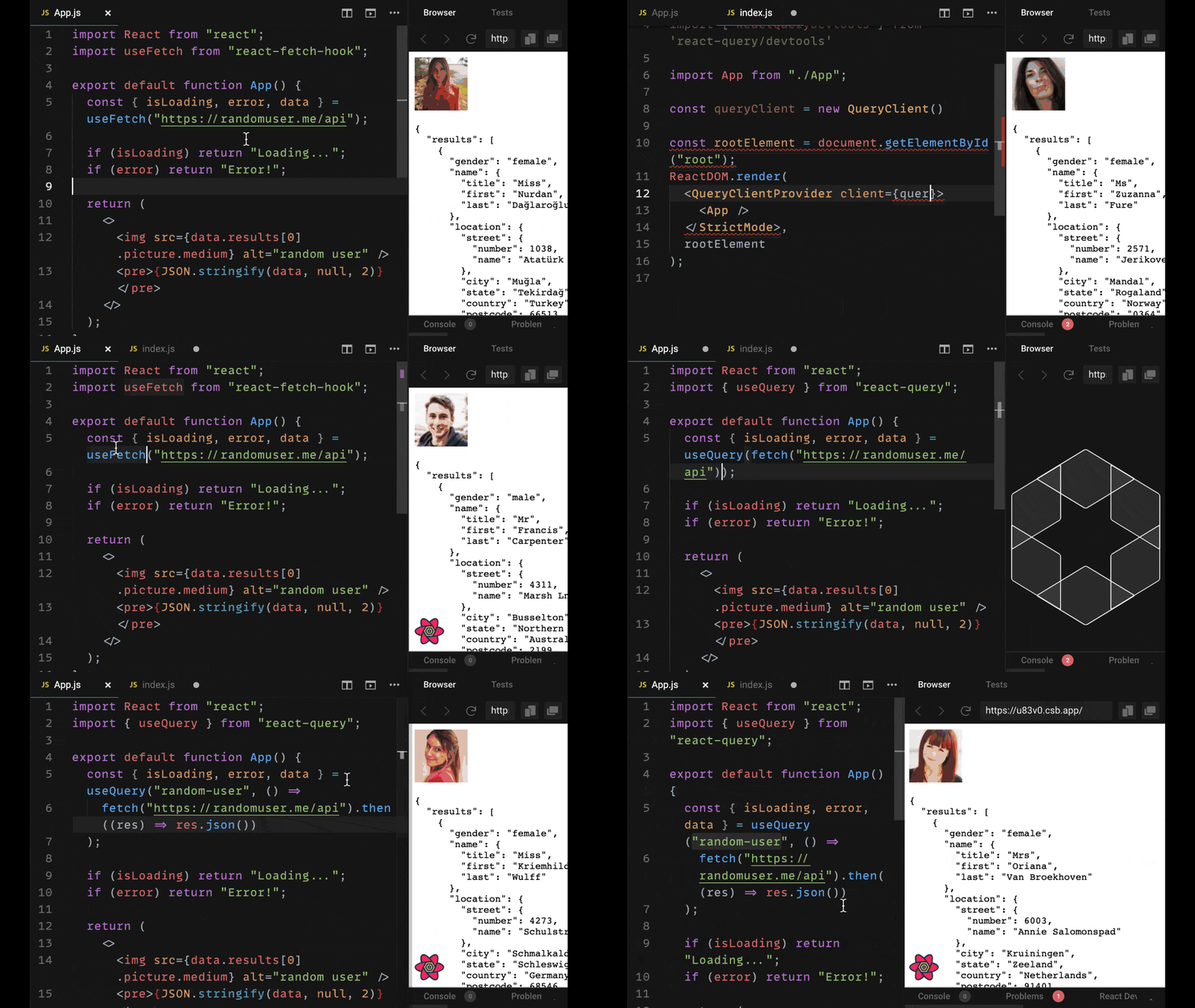
Past referencing that key, we tin can practice powerful things such equally refetch, validate or reset our diverse queries.
If we rely on our custom hook solution or useEffect, we will refetch our data every single time our component is mounted. To practice this is in about cases unnecessary. If our external state hasn't changed, we should ideally not have to bear witness loading state every time we display our component.
React Query improves our user feel greatly by trying to serve our data from its enshroud first and so update the data in the background to display changes if our API state has changed.
Information technology also gives us an arsenal of powerful tools to better manage our requests co-ordinate to how our data changes through our request.
For example, if our application immune us to add a dissimilar user, we might want to refetch that query, once the user was added. If we knew the query was beingness inverse very often, we might want to specify that it should be refreshed every minute or then. Or to be refreshed whenever the user focuses their window tab.
In brusque, React Query is the go-to solution for not simply making requests in a concise manner, but also efficiently and effectively managing the data that is returned for our HTTP requests across our app'due south components.
Want to keep this guide for time to come reference?
Click here to download the cheatsheet as a helpful PDF.
Here are 3 quick wins y'all get when yous grab the downloadable version:
- You'll go tons of copyable code snippets for easy reuse in your own projects.
- It is a dandy reference guide to strengthen your skills equally a React developer and for chore interviews.
- You can have, use, print, read, and re-read this guide literally anywhere that yous similar.
Acquire to lawmaking for free. freeCodeCamp's open source curriculum has helped more than forty,000 people get jobs as developers. Go started
Source: https://www.freecodecamp.org/news/fetch-data-react/
0 Response to "How to Stop Useeffect From Refetching Again"
Post a Comment